
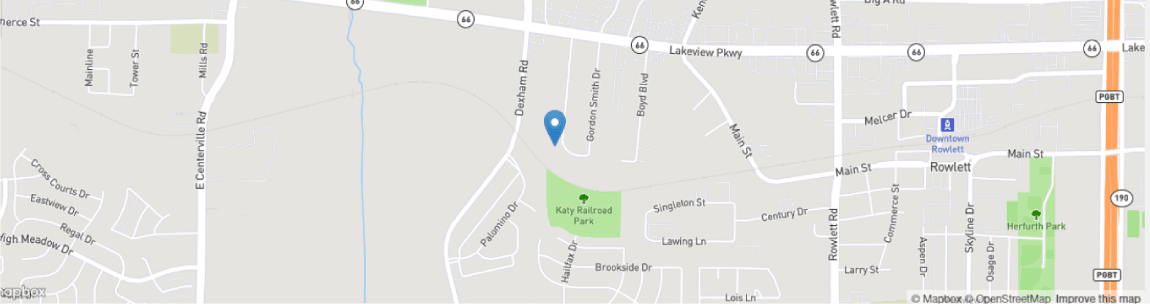
 4921 Grisham Dr. Suite A
Rowlett, TX 75088
 4921 Grisham Dr. Suite A

You ran into the store for ten minutes. Come back, turn the key, and you get one solid click and nothing else. Twenty minutes later it fires like nothing was ever wrong, which is the single most misleading symptom in the whole no-start category.
A BMW that starts cold and refuses hot is describing a starter, not a battery. After a long Texas summer the starter on an N52 or N55 has been heat-soaked between the intake manifold and the block for months, and autumn is when the marginal ones finally start missing. Rowlett drivers tend to replace a perfectly good battery first.
On most inline-six BMWs the starter sits low on the driver’s side of the block, partly buried under the intake and near the exhaust manifold. Hard to reach. Hotter than anything else back there.
Heat is cumulative damage. Every soak cycle bakes the insulation on the field windings and the grease in the bushings, and the solenoid contacts pit until they no longer pass enough current to spin the motor hot.
So the failure has a season. Cars that survived July start acting up once the mornings cool, because the gap between a cold start and a hot restart is finally wide enough to matter.

Listen to what the car does, not what it fails to do. A battery problem sounds tired — slow cranking that gets slower, dimming headlights, a flickering dash. A starter problem sounds sudden. One noise, then silence.
One click, full brightness, no rotation is the classic. So is rapid machine-gun clicking, which means the solenoid keeps pulling in and dropping out because system voltage collapses the instant the motor asks for current and then recovers the moment it stops asking.
Then there is the grinding version. If it engages and screams without turning the engine, the drive gear or the flexplate teeth are chewed, and that changes the repair.
Before condemning a starter we measure voltage drop. Battery positive to starter terminal, block to battery negative, and the small trigger wire off the ignition circuit. A tenth of a volt too much in any of those explains the whole complaint.
Texas corrosion is quieter than New England corrosion. It is not absent. Terminal ends oxidize under the plastic covers, and the ground strap from block to body loosens over years of heat cycling.
The starter relay is worth a minute too. A relay with pitted contacts passes enough current to click the solenoid and not enough to spin the motor, which is a cheap fix that gets missed constantly. Low system voltage during cranking also stores codes in other modules, so the fault memory is worth reading before anyone orders a part.
Even when the starter is guilty, the battery is usually an accomplice. One at the end of its life gives enough current for a cool morning and not enough for a hot restart. It makes a tired starter look far worse.
The numbers are unflattering here. AAA notes that most batteries have a three- to five-year service life and that heat, not cold, is the leading cause of battery failure, and in 2015 it estimated nearly 500,000 roadside battery replacements over one summer driving season.
In this climate we plan for the short end of that range. Three years in Rowlett is a fair working life; five is optimistic.
This is not a fifteen-minute job. Access on most six-cylinder BMWs means pulling the intake manifold or working blind from underneath, with long bolts and almost no swing room.
We check the flexplate teeth while we are in there. A starter that has been grinding leaves evidence, and bolting a new unit up against chewed teeth guarantees you are back here in six months paying the same access labor a second time.
Every repair we do carries a 3-year, 36,000-mile warranty, and there is a courtesy shuttle if you need to get back to work while the car is up.
The first intermittent no-start is a warning shot. The second one picks somewhere inconvenient — a lakeside lot off Lakeview Parkway, or the far end of a grocery run with someone waiting in the car.
Our shop is at 4921 Grisham Drive, Suite A, and we work on Audi, BMW, Jaguar, Land Rover, Mercedes, Porsche, Volkswagen and Volvo, with ASE-certified technicians doing the work.
Owners come to us from Garland, Rockwall, Sachse and Wylie. If it has clicked at you once, contact us.
Q: Why does my BMW start when cold but not when hot?
A: Heat. As the unit warms, worn solenoid contacts and aged windings stop passing full current, so the motor will not turn. Once everything cools the same starter works again, which is why the fault looks random.
Q: Is one loud click a bad starter or a bad battery?
A: Usually the starter or its cables. A single click with bright headlights and a healthy dash means the solenoid engaged but the motor did not turn. A weak battery normally produces slow, labored cranking and visible dimming rather than a clean click.
Q: How long does a BMW starter last?
A: Often well past 100,000 miles. Hot climates shorten it. Repeated heat soak under the intake degrades the windings and pits the solenoid contacts, so eight-to-twelve-year failures are common in North Texas.
Q: Can a bad ground cause a no-start that looks like a starter?
A: Yes, and it is worth testing before buying parts. A corroded battery terminal or a loose engine-to-body ground strap adds resistance that starves the starter of current. Measuring voltage drop across each connection takes minutes and rules it out.
One intermittent no-start is enough information to act on. Bring the car in and we will test the battery, the cables, the relay and the starter itself, then tell you which one is actually failing.
 469-910-8087
 4921 Grisham Dr. Suite A
 Mon – Fri : 8am – 6pm
Site Design & Marketing By 
Rowlett Motorwerks

 469-910-8087